Quick answer
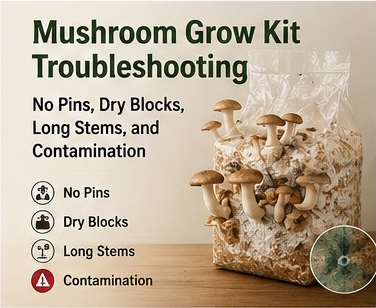
A mushroom block can look inactive for days and then change quickly. Troubleshooting works best when you identify the pattern—dryness, excessive carbon dioxide, heat, contamination, or normal colonization—rather than misting harder at every problem.
Key takeaways
- Follow the kit maker’s instructions first.
- Long stems and tiny caps often point to insufficient fresh air for many oyster varieties.
- Cracking or stalled pins may signal low humidity or drying.
- Green, black, pink, or foul-smelling growth deserves caution.
- Photograph the block and contact the grower before discarding a questionable kit.
No pins after the expected window
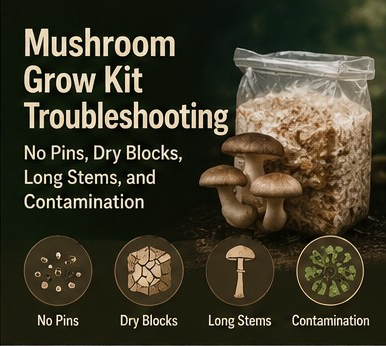
First confirm that the block was opened or cut exactly as instructed and that the temperature falls within the species range. Then review humidity, indirect light, and fresh air. A surface that repeatedly dries can stall pin formation; a sealed bag can retain moisture while limiting oxygen. Avoid constantly changing several conditions at once. Make one measured adjustment, document it, and give the block time to respond.
The surface looks dry or cracked
Increase local humidity without flooding the block. Mist the inside of a humidity tent or the air around the fruiting opening rather than soaking developing mushrooms. Move the kit away from vents, heaters, and direct sun. A tray can protect the surface beneath the kit, but standing water touching the block can encourage problems. Follow the kit’s instructions because species and bag designs differ.
Long stems, small caps, or odd shapes
For many oyster mushrooms, long stems and undersized caps can indicate insufficient fresh-air exchange and elevated carbon dioxide. Lion’s Mane can form coral-like or elongated growth under high carbon dioxide. Increase gentle fresh air while preserving humidity. Do not place a fan directly on the fruiting body, which can dry it rapidly. Shape is a clue, not a diagnosis; compare with the seller’s species-specific guidance.
Pins form and then stop
Aborts can follow drying, temperature swings, rough handling, excessive misting, or a weak block. Remove dead or decaying tissue only when the manufacturer recommends it and use clean hands or tools. Restore stable conditions rather than chasing growth with fertilizer or household additives. A living block has finite energy, and not every pin will mature.
Possible contamination
White growth is usually mycelium, but green powdery patches, black growth, strong foul odor, slime, or rapid unfamiliar color changes deserve caution. Isolate the kit from food, plants, and other cultures. Do not taste the mushrooms or inhale a suspect area deliberately. Photograph the issue in natural light and contact the seller. When disposal is advised, seal the block and follow local waste guidance.
A second flush will not start
Many kits need a rest and rehydration period after harvest. Remove remaining mushroom tissue as directed, allow the block to rest, and soak or rehydrate only according to the manufacturer’s instructions. Later flushes commonly take longer and produce less. If the block is very light, dry, exhausted, or contaminated, another flush may not be realistic.
Keep a simple grow log
Record species, arrival date, start date, room temperature, misting, tent use, pinning date, harvest date, and photographs. A log makes troubleshooting more accurate and gives the seller useful evidence if replacement is needed. It also prevents the classic mistake of changing humidity, temperature, airflow, light, and watering all at once and learning absolutely nothing from the result.
Frequently asked questions
Should I spray the mushrooms directly?
Follow the kit instructions. Excess water sitting on fruiting bodies can create problems; many kits focus on humidifying the surrounding air.
Can I cut mold off and eat the mushrooms?
Do not assume that is safe. Isolate the kit and seek guidance from the grower when contamination is suspected.
Why did I get only one small flush?
Genetics, block size, shipping stress, hydration, temperature, humidity, airflow, and harvest timing all affect yield.
Sources and further reading
Reviewed and organized by the MyShroom Planet™ Editorial Team. Product labels, formulas, and retailer listings can change, so use the current package directions for the exact product you purchase.