Updated Aug. 2026
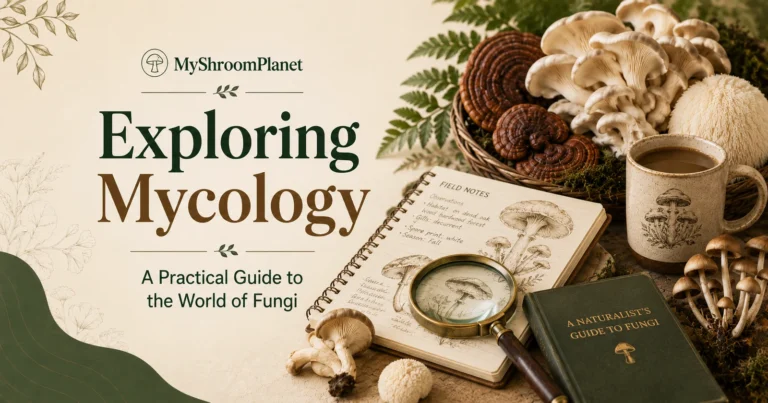
Exploring Mycology: A Practical Guide to the World of Fungi
Mycology is more than mushroom identification. Learn how fungi grow, feed, reproduce, shape ecosystems, and support medicine, food, and biotechnology.
Read the guide →
Mushroom knowledge library
MyShroom Planet™ publishes direct-answer guides with visible sources, key takeaways, FAQs, internal paths, update signals, and clear claim boundaries across science, supplements, coffee, growing, and cooking.
Latest guides
Updated Aug. 2026
Mycology is more than mushroom identification. Learn how fungi grow, feed, reproduce, shape ecosystems, and support medicine, food, and biotechnology.
Read the guide →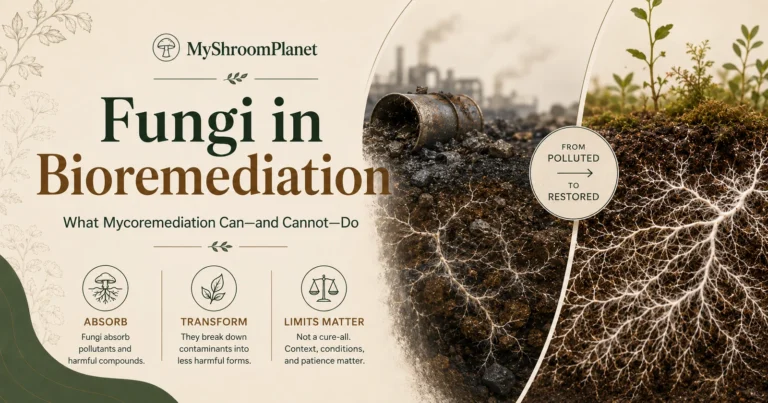
Updated Aug. 2026
Mycoremediation uses fungi or fungal enzymes to transform, bind, or help remove contaminants. Here is where the science is promising and where real-world limits matter.
Read the guide →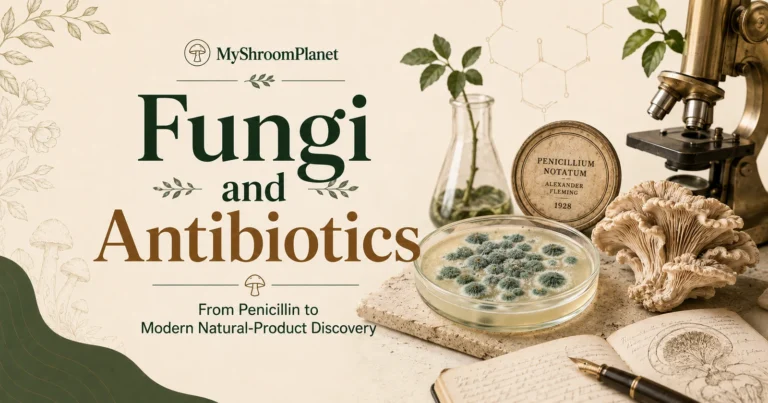
Updated Aug. 2026
Fungi have supplied major medicines and continue to inspire drug discovery—but not every antibiotic-producing microbe is a fungus.
Read the guide →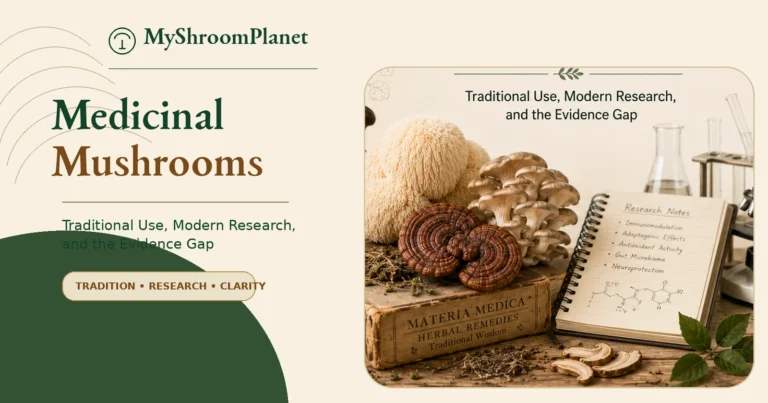
Updated Aug. 2026
A careful guide to medicinal mushroom traditions, extracts, beta-glucans, current research, supplement labels, and the difference between promising evidence and proven treatment.
Read the guide →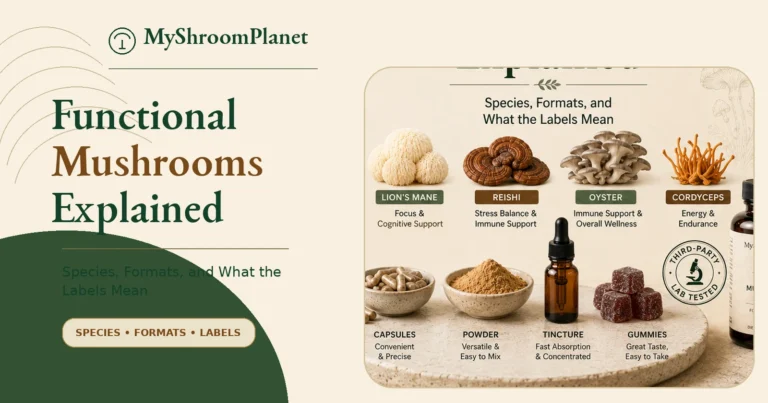
Updated Aug. 2026
Functional mushrooms are species sold for more than culinary flavor, usually as capsules, powders, coffee blends, gummies, or liquid extracts. The useful question is what the label actually proves.
Read the guide →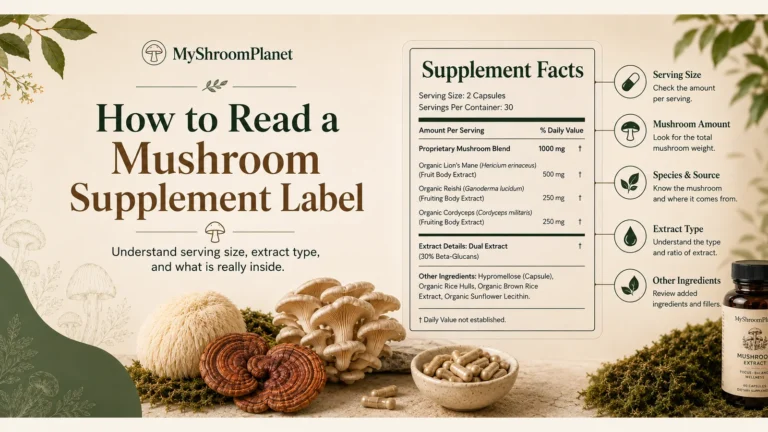
Updated Aug. 2026
The front of a supplement bottle is advertising. The Supplement Facts panel and ingredient list are the contract. This guide translates extract ratios, milligrams, serving size, and label claims.
Read the guide →
Updated Aug. 2026
Beta-glucans are among the most discussed compounds on mushroom supplement labels. A measured percentage can improve transparency, but it should be treated.
Read the guide →
Updated Aug. 2026
Mushroom coffee is not one caffeine category. Some products use full-strength coffee, some are low caffeine, some mix tea or cacao, and some contain no coffee at all.
Read the guide →
Updated Aug. 2026
Regular coffee and mushroom coffee are not enemies. One is a familiar brewed beverage; the other is a broad category that may combine instant coffee with mushroom extracts and other ingredients.
Read the guide →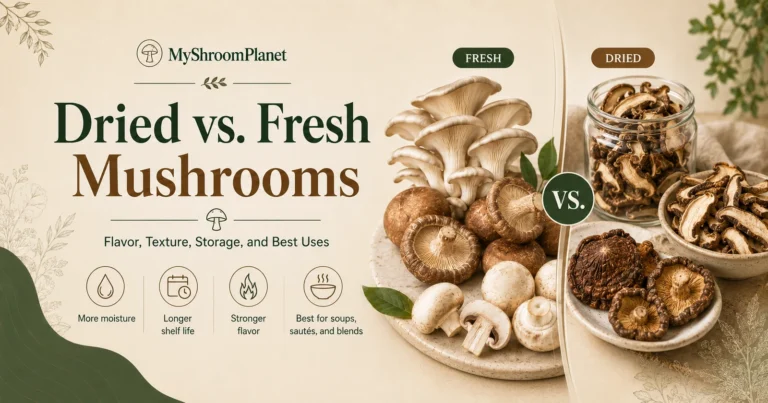
Updated Aug. 2026
Dried mushrooms are not merely fresh mushrooms with the water removed. Drying concentrates aroma, changes texture, extends storage, and creates a deeper pantry flavor.
Read the guide →
Updated Aug. 2026
The best Lion’s Mane format is the one that delivers a transparent serving in a routine you will repeat. Compare capsules, liquids, powders, and gummies by their real tradeoffs.
Read the guide →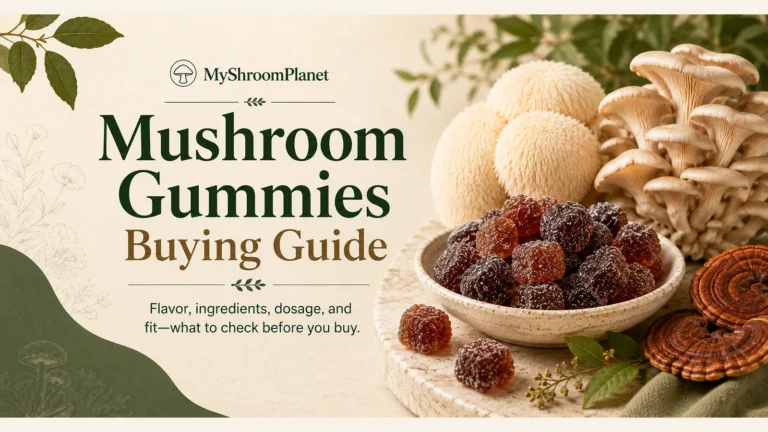
Updated Aug. 2026
Mushroom gummies solve one real problem: routine friction. They are portable and easier for many people than capsules or powders, but flavor systems, sweeteners, serving size, and formula clarity still matter.
Read the guide →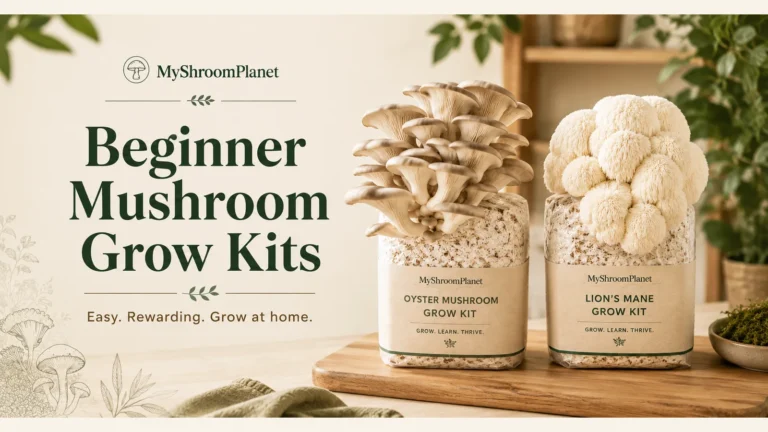
Updated Aug. 2026
A ready-to-fruit mushroom kit is the cleanest way to experience cultivation without preparing grain spawn or sterilizing substrate. It is still a living product that needs the right room and care.
Read the guide →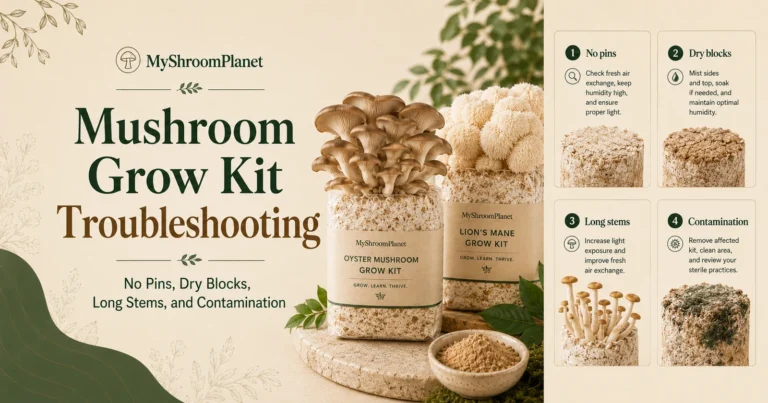
Updated Aug. 2026
A mushroom block can look inactive for days and then change quickly. Troubleshooting works best when you identify the pattern—dryness, excess carbon dioxide, temperature, contamination, or simple timing.
Read the guide →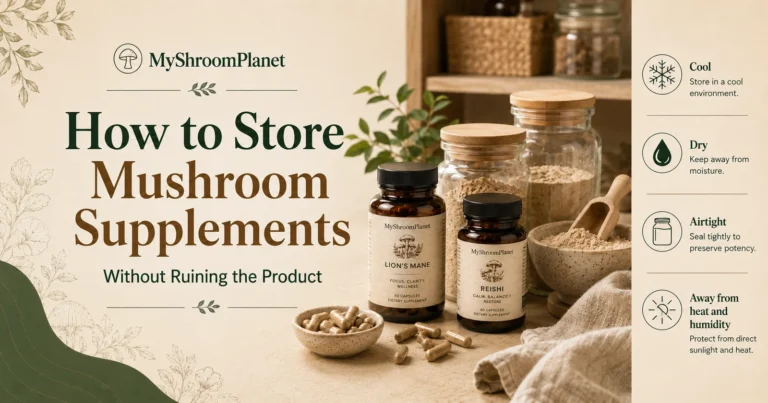
Updated Aug. 2026
Heat, moisture, oxygen, light, and repeated contamination can shorten the useful life of powders, gummies, capsules, and liquids. Storage is not glamorous, but it protects the product you paid for.
Read the guide →
Updated Aug. 2026
“Natural” does not mean interaction-free. Mushroom supplements can combine concentrated extracts with herbs, vitamins, caffeine, sweeteners, and absorption-enhancing ingredients.
Read the guide →Keep the decision connected