
Quick answer
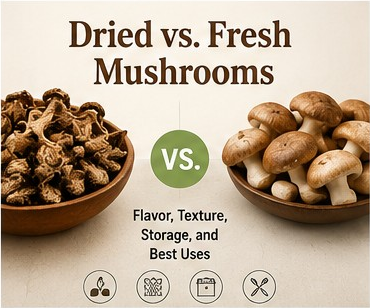
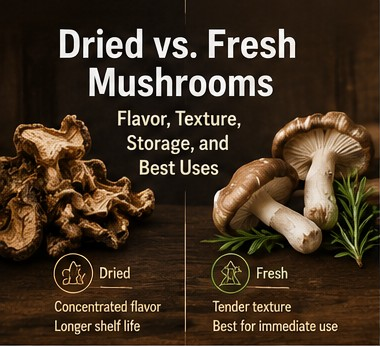
Dried mushrooms are not merely fresh mushrooms with the water removed. Drying concentrates aroma, changes texture, extends storage, and creates a deeply flavored soaking liquid. Fresh mushrooms offer tenderness and immediate cooking. The better option depends on the dish.
Key takeaways
The main difference is water
Fresh mushrooms contain substantial water, which gives them a tender texture and short refrigerator life. Drying removes much of that water, concentrates weight-based flavor, and creates a shelf-stable pantry ingredient when packaged and stored correctly. A small amount of dried mushrooms can represent a much larger fresh weight, so direct ounce-for-ounce comparisons can be misleading.
Flavor and texture change
Drying can intensify savory aromas, especially in shiitake and porcini, while changing texture. Rehydrated shiitake remain firmer and chewier than many fresh mushrooms. Wood ear mushrooms are prized for crisp, springy texture rather than a strong mushroom flavor. Fresh mushrooms may be better for quick sautéing; dried mushrooms often excel in broths, sauces, braises, ramen, risotto, and dumpling fillings.
How to rehydrate safely
Place dried mushrooms in a clean bowl and cover with warm or room-temperature water according to the product instructions. Weight them down if needed and allow enough time for the centers to soften. Agitate and rinse to remove grit. Strain the soaking liquid through a fine filter or coffee filter before using it, and discard sediment. Cook rehydrated mushrooms thoroughly and refrigerate unused rehydrated mushrooms promptly.
The soaking liquid can be an ingredient
Shiitake and porcini soaking liquid can add flavor to soup, sauce, rice, or risotto after careful straining. It is not automatically clean simply because it looks clear; dried mushrooms can carry grit. Wood ear soaking liquid is less commonly valued for flavor. Follow product-specific guidance and discard liquid that smells spoiled, appears slimy, or came from a questionable package.
Nutrition comparisons need equal weights
Dried mushrooms often appear more nutrient-dense per 100 grams because water has been removed. That does not mean a typical small dried serving provides the same amount as 100 grams of fresh mushrooms. Preparation, species, UV exposure, cooking, serving size, and laboratory method affect nutrient values. Use nutrition panels or reliable databases with comparable serving sizes.
Storage and spoilage
Store unopened dried mushrooms according to the package, usually in a cool, dry place. After opening, seal them against humidity and insects. Discard packages with mold, moisture damage, foul odor, or pest activity. Fresh mushrooms should be refrigerated with airflow and used before they become slimy or strongly odorous. Rehydrated mushrooms should be treated as perishable food.
Choose according to the dish
Choose fresh mushrooms for delicate texture, raw-approved uses, quick sautés, and recipes where appearance matters. Choose dried mushrooms for pantry storage, concentrated broth, species that are hard to find fresh, and long-cooked dishes. Keeping both is not redundant: they behave like related but distinct ingredients rather than identical versions of the same food.
Frequently asked questions
Can I cook dried mushrooms without soaking?
Some thin or powdered products can cook directly in liquid, but most whole or sliced dried mushrooms benefit from rehydration.
Can I drink mushroom soaking liquid?
Use it as a cooking liquid after thorough straining and cooking. Do not use liquid from mushrooms of uncertain identity or questionable quality.
How long do dried mushrooms last?
Follow the package date and storage instructions. Quality declines with moisture, heat, pests, and air exposure.
Sources and further reading
Reviewed and organized by the MyShroom Planet™ Editorial Team. Product labels, formulas, and retailer listings can change, so use the current package directions for the exact product you purchase.