
Quick answer
Heat, moisture, oxygen, light, and repeated contamination can shorten the useful life of powders, gummies, capsules, and liquids. Storage is not glamorous, but it protects the product you already paid for.
Key takeaways
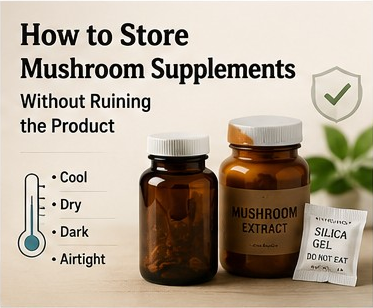
- Follow the manufacturer’s label over generic advice.
- Keep dry products tightly closed and away from steam.
- Do not refrigerate automatically; condensation can damage some products.
- Use clean, dry utensils for powders.
- Discard products with unexpected odor, color, texture, swelling, leakage, or damaged seals.
Follow the product label first
Storage directions vary by format and ingredients. A dry capsule may need a cool, dry cabinet; a liquid may require refrigeration after opening; a gummy may soften in heat; and a coffee blend may absorb humidity and odors. The manufacturer’s current label should override generic advice. Keep the original packaging so the lot, expiration, warnings, and serving instructions stay with the product.
Control heat, light, air, and moisture
Repeated heat and humidity can damage texture, flavor, and stability. Avoid bathrooms, windowsills, hot cars, and cabinets above stoves or dishwashers. Close lids and pouches completely and use the included desiccant only as intended. Do not eat a desiccant packet. If you transfer a product for travel, label the container and keep the original package information available.
Capsules and powders
Use dry hands and clean scoops. Do not leave a scoop buried in powder if the label advises otherwise, and do not introduce a wet spoon. Watch for clumping, discoloration, unusual odor, damaged capsules, insects, or a broken seal. Some clumping can reflect humidity rather than contamination, but unexplained changes warrant contacting the manufacturer or replacing the product.
Gummies and soft chews
Keep gummies away from heat, direct sun, and children. Refrigeration may change texture and is not automatically required unless the label says so. If gummies melt into one mass, develop unusual odor, show mold, or lose package integrity, do not guess at the dose by tearing off pieces. Replace the product and review storage conditions.
Liquid extracts
Close the dropper tightly, avoid touching it to the mouth or another surface, and follow refrigeration instructions. Note the carrier because alcohol, glycerin, and water-based liquids can have different stability and taste. Cloudiness or sediment may be normal for some products, but unexpected odor, gas, leakage, or visible growth should be reported to the manufacturer.
Expiration and travel
An expiration or best-by date does not guarantee quality after poor storage, and a product does not become automatically dangerous at midnight on the printed date. It indicates the company’s supported period under stated conditions. For travel, protect products from heat and moisture, keep them identifiable, and review destination rules. Do not combine several supplements in an unlabeled container when doses or warnings differ.
Frequently asked questions
Should mushroom powder go in the refrigerator?
Only when the manufacturer recommends it. Refrigeration can introduce condensation each time the container is opened.
Can I use a clumped powder?
Clumping may reflect moisture. Check the label and contact the manufacturer, especially when odor, color, or texture has changed.
Do supplements expire immediately on the date?
A date is not a magical switch, but potency and quality are not assured indefinitely. Follow the manufacturer and replace questionable products.
Sources and further reading
Reviewed and organized by the MyShroom Planet™ Editorial Team. Product labels, formulas, and retailer listings can change, so use the current package directions for the exact product you purchase.